
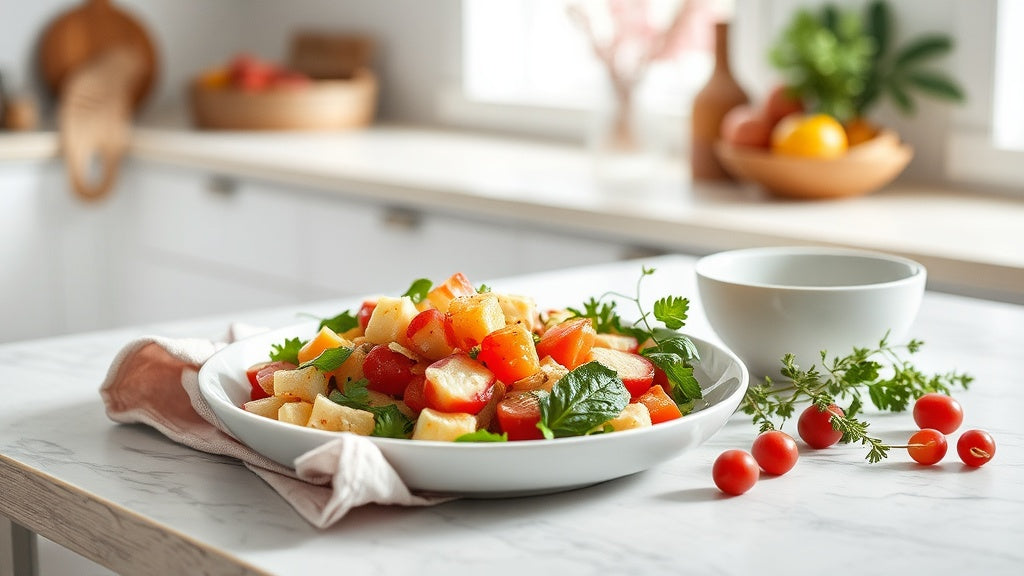
Why cooking two dishes at once on a double cooktop is so convenient
A double cooktop has two separate cooking zones, and that's more than just a comfort feature. You can let a sauce simmer gently while you stir-fry vegetables on high heat – without one interfering with the other. You save time and energy, and your complete meal is ready all at once.
The key is planning: how much time does each dish need, and at what setting? Once you've worked that out in advance, cooking goes surprisingly smoothly – even on a compact setup.
How do you combine two dishes on a double cooktop?
The rule of thumb is simple: combine a dish that requires heat and attention with a dish that can quietly take care of itself. This way you make the most of both zones without having to constantly switch back and forth.
Some tried-and-tested combinations:
- Boiling pasta on high heat + gently simmering tomato sauce
- Steaming rice on low heat + stir-frying vegetables on medium heat
- Warming soup on low heat + frying an egg or omelette on medium heat
- Boiling potatoes on high heat + stirring béchamel sauce on low heat
Step by step: cooking two dishes at the same time
- Plan your timing. Look at both recipes and note down the cooking times. Determine which dish takes the longest and start with that one first.
- Divide the heat zones deliberately. Use one zone for dishes that need high or variable heat, and the other for dishes that require a constant, low temperature.
- Start the longest dish first. For example, put the potatoes on before you start the sauce, so that everything is ready at the same time.
- Set the heat levels correctly. Use a low or gentle setting for simmering and keeping warm. For frying and boiling, use medium to high heat.
- Use the right cookware. Make sure the pan matches the cooking zone well – a pan that's too small or too large causes uneven heating and longer cooking times.
- Keep an overview. Check both dishes regularly. A timer per dish helps enormously, especially when you're doing other kitchen tasks at the same time.
Which dishes are best to combine on a double cooktop?
The best combinations are those where the two dishes have different heat requirements. A dish on low heat requires barely any attention and leaves you free to fully monitor the other dish. Avoid two dishes that both require constant stirring or high heat – that creates stress and increases the risk of burning.
Dealing with different cooking times? Start with the dish that takes the longest, and add the quicker dish halfway through. That way, both dishes are done within the same window of time.
Handy guidelines for heat settings
- Low heat (level 1–3): sauces, melting butter, finishing rice, keeping warm
- Medium heat (level 4–6): sautéing vegetables, stir-frying, omelette
- High heat (level 7–9): boiling water, pasta, potatoes
How much energy do you save by cooking two dishes at once?
When you use both zones at the same time instead of one after the other, you significantly shorten the total cooking time – and that directly reduces energy consumption. Instead of heating the cooktop twice, you use a single cooking session for a complete meal. That's more efficient, especially with daily use.
A compact electric cooktop like the bakeVIA cooktop is perfectly suited for this: the two zones respond quickly to changes in setting, so you can switch from high to low without a long wait. That makes combining dishes with different cooking times a great deal easier.
Tips to prevent both dishes from going wrong at the same time
- Set a timer per dish – not just one general kitchen timer.
- Use a lid on the simmering dish to retain heat and reduce the need for adjustments.
- Have all cutting and prep work ready before you switch on the cooktop – that keeps your hands free while cooking.
- Use pans that are a similar size to the cooking zones for the best results.
- Switch a zone to the keep-warm setting in good time if one dish is ready but the other isn't yet.
The bakeVIA double cooktop is compact enough for any countertop, yet powerful enough for a complete daily meal. Whether you're cooking for yourself or for two – with the right approach, both dishes are on the table at the same time, without any hassle.